You Are Not the Problem
Why Your Life Works Exactly as Designed—and How to Redesign It
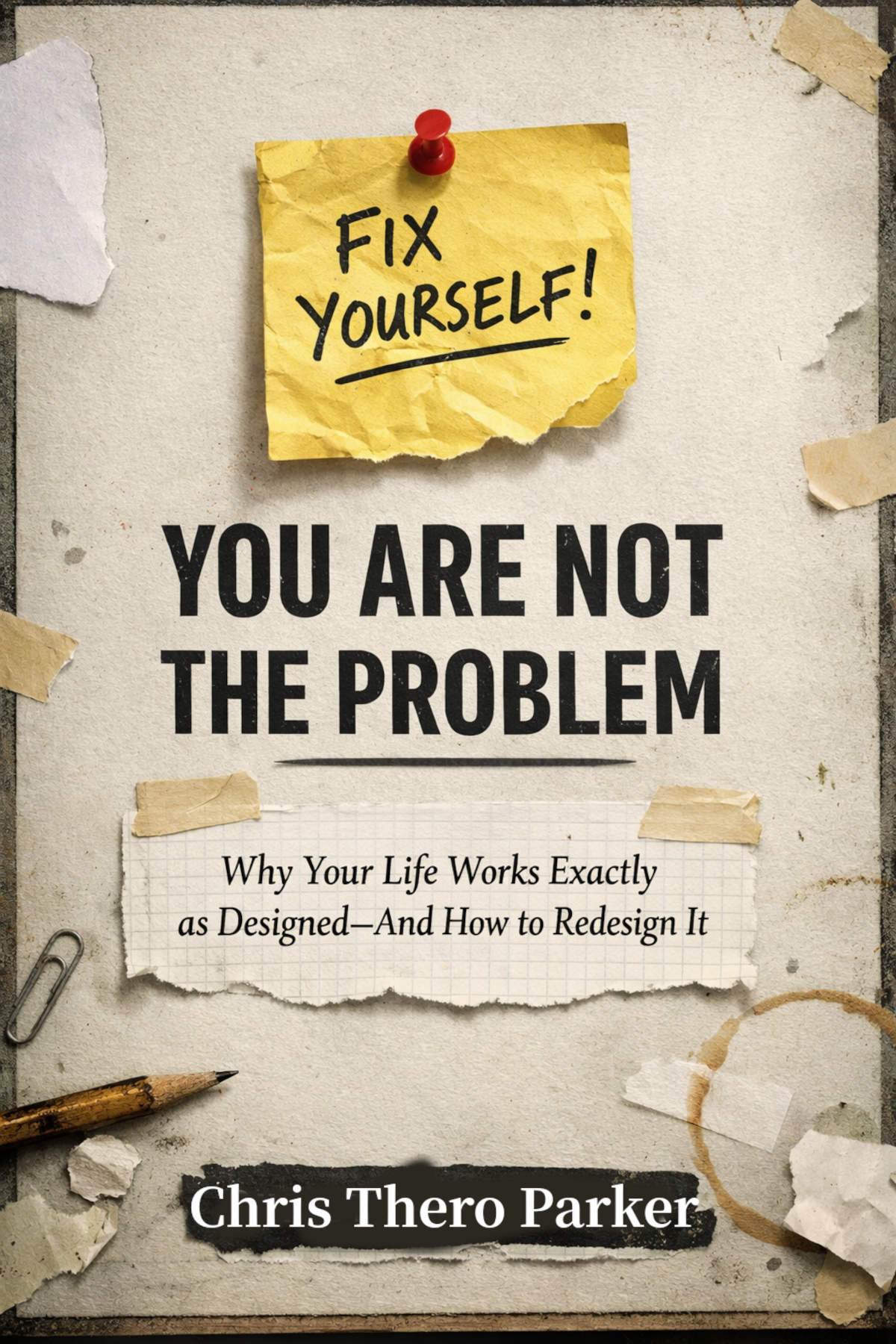
You Are Not the Problem exposes why most self-improvement efforts fail—and how real, lasting change actually happens. Most people do not lack motivation; they are embedded in systems, feedback loops, and environments that make the desired action costly or invisible. Pep talks, advice, and personality frameworks rarely help because they focus on the wrong level: the self instead of the system.
In Part I, Chris Thero Parker shows that over-explaining yourself produces comfort but not results. Motivation is not fuel, personality is rarely causal, and advice mostly helps those already positioned to succeed. True leverage comes from examining what your environment rewards.
Part II explores the machinery behind our behavior: feedback loops, time lags, incentives, and environmental design. Yesterday’s actions are still running today. Delays distort learning. Incentives shape outcomes silently. Willpower is finite; environment is relentless. Change happens when you compress feedback, redesign incentives, and make desired behaviors easier than the alternatives.
Part III demonstrates how small, targeted adjustments can produce outsized results. Lower the bar, design for the distracted or tired version of yourself, and treat habits as side effects of stable systems. Progress is often subtraction, not addition: remove friction, remove unnecessary choices, and simplify conditions until good behavior becomes automatic.
Part IV reframes failure. Stopping or relapsing is diagnostic, not moral. Systems break, not people. Learning comes from analyzing interruptions, designing for robustness, and resuming without symbolic resets. Durable change emerges from continuity, not heroics.
Part V teaches how to live without the self-help identity. Quiet competence outperforms public declarations. Predictability is a strength, reducing cognitive load and aligning action with intention. The most durable improvements occur privately, in ordinary conditions, without fanfare.
The Appendix addresses common objections: “This won’t work for me,” “I already knew this,” and “But what about passion?” Each is reframed through the lens of systems and feedback, showing that testing, engagement, and design matter more than willpower or inspiration.
You Are Not the Problem is for readers who want results without guilt or grandiosity. It is a practical guide to understanding the systems that shape behavior, harnessing small levers, and designing a life that reliably produces the outcomes you intend.
Part I — The Problem Is Not What You Think
- You Are Not Unmotivated, You Are Over-Explained
- Why Advice Works Best on People Who Don’t Need It
- The Personality Myth (A Short Funeral)
Part II — The Machinery You Are Already Inside
- Feedback Loops: Why Yesterday Is Secretly Running Today
- Time Lags: The Cruel Delay Between Cause and Consequence
- Incentives: Doing Exactly What the System Pays You For
- Environment Beats Willpower (And Doesn’t Get Tired)
Part III — Small Levers With Disproportionate Effects
- Lowering the Bar Until You Trip Over It
- Designing for the Worst Version of You
- Habits as Side Effects, Not Achievements
- Subtraction: Progress by Removal, Not Addition
Part IV — Failure, Anticipated
- Why You Will Stop (And Why This Is Not a Moral Event)
- Relapse Is a Design Flaw, Not a Betrayal
- How to Resume Without Starting Over
Part V — Living Without the Self-Help Identity
- Quiet Competence
- No One Needs to Know You’ve Changed
- The Relief of Being Predictable
Appendix
- Things People Argue With Instead of Trying